

milk maid
The trials and tribulations of a part-time milker

Sometime over the Christmas break last year I mentioned to my father that I’d like to move home in the coming year. ‘Great, but what are you going to do?’, he asked. ‘I was thinking I could milk the cows?’, my question was fraught with uncertainty, as I sat waiting for a negatory reply. Much to my surprise, he chuckled and said ‘You could’. Great; perfect! My abstract dream of moving home to Kerry and making yoghurt/cheese/ice cream/something was finally coming to fruition. Four months later I finally moved home. I waited patiently for a few days to be called up for duty. After almost a week nothing had happened. Each morning Dad went out to milk the cows and I looked on longingly from the window. Maybe he’d forgotten about my ambitions. Not to worry - I would remind him! That evening I made him tea and offered him a fresh packet of his favourite biscuits (raspberry creams). I sat down in the chair and stared at the television and sipped my tea. After he’d demolished a few biscuits I decided it was time to broach the subject. ‘When is my trial shift as a milker starting?’ I offered tentatively. His eyebrows raised slightly as he let out a solitary chuckle. Without taking his eyes off the TV, he replied ‘tomorrow morning?’. I set my alarm for 6:00 am. I leapt out of bed when it went off, it was crucial that I not be late. I made myself a coffee and gulped it down, quickly making myself another. Dad arrived downstairs to the kettle boiled and a tea bag waiting in his mug. I sat at the kitchen table and watched as he transferred the tea bag from the mug to a takeaway flask. I understood this silent instruction and did the same with my coffee. He was already making his way down the yard by the time I had the lid on my coffee. I quickly pulled on an old jacket over my rattiest t-shirt and tracksuit pants - no room for glamour here - and scampered into the parlour after him. I’m careful not to ask too many questions, it’s clear that silence is preferred at this hour of the morning.
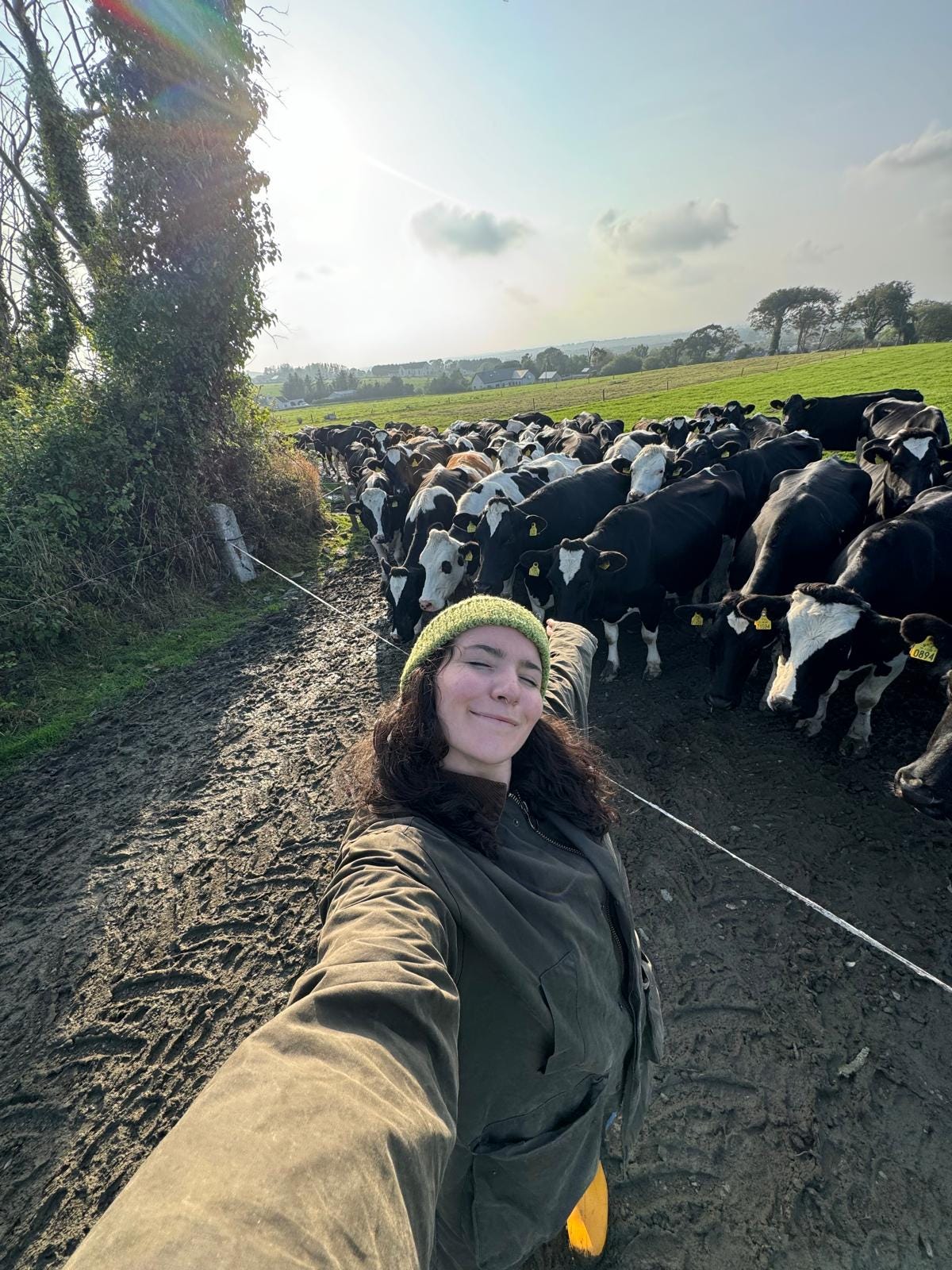
I trot after him as we head back the fields to get the cows. It’s a beautiful morning. Chilly and misty, the sun is peeking its brow over the crest of the hill we’re walking towards. I stop to take a little clip and think of a line from Wendy Cope’s poem ‘The Orange’ - ‘This is peace and contentment. It’s new.’
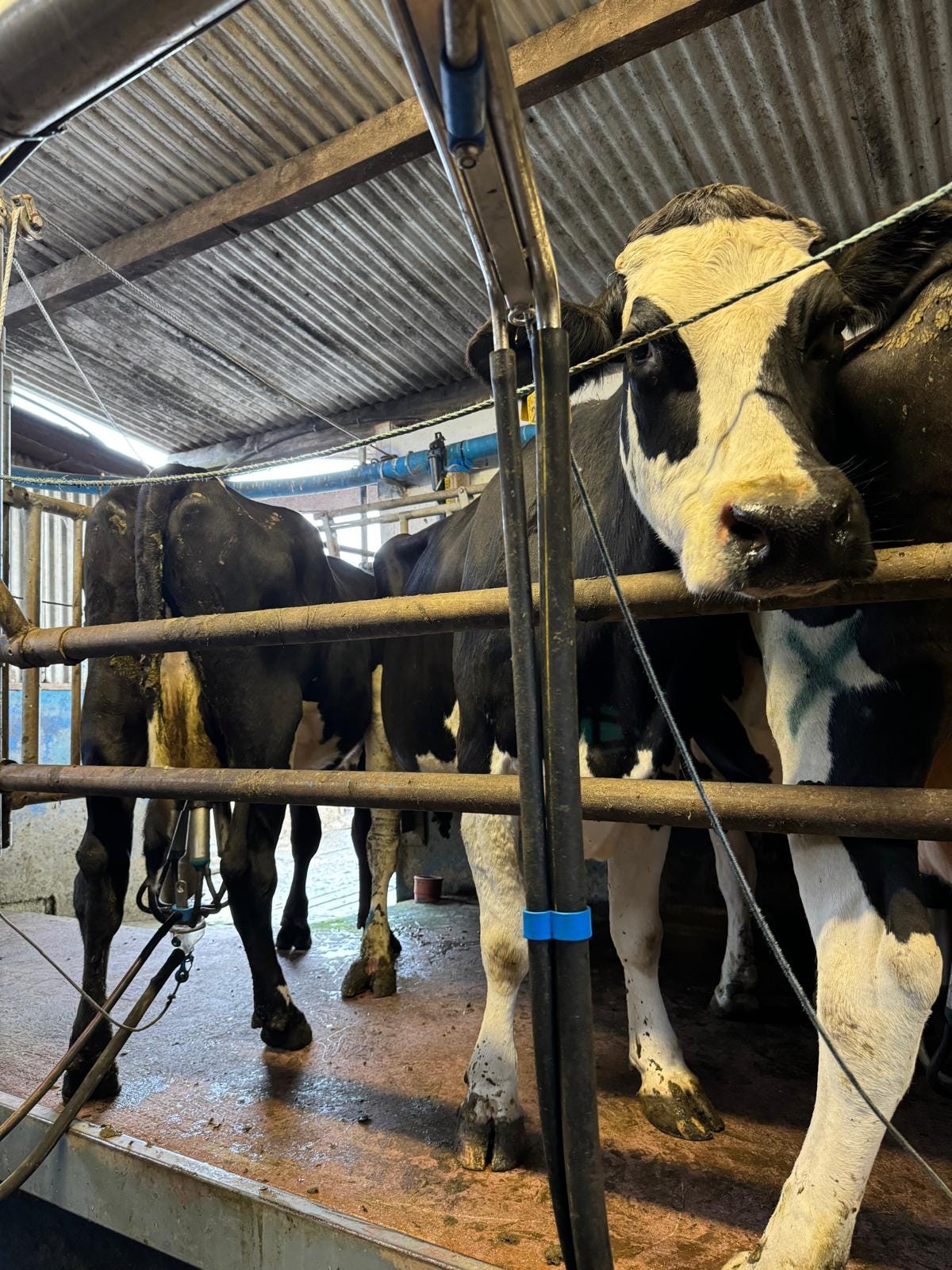
I catch up with Dad just as we reach the gap the cows are waiting at. We open it and they obediently make their way towards the parlour. He tells me to take up the wire and pigtails to give them the rest of the field to graze for later. I do as I’m told, giving myself two belts off the electric fence in the process. I’d forgotten what that felt like. I return to the parlour just as the first clusters are going on the first round of cows. He notices my clothes and says ‘you’ll have to get a pair of waterproof trousers.. the shit will soak straight through that’. Within minutes I understand what he means as my tracksuit pants have absorbed every splatter of cowshit like a sponge. We milk ten cows per round, and six rounds in total, it takes about an hour and a half including washing down. I’m warned that leaving the switch for the volume washer on would result in the hose bursting. I can tell from the tone that this is something to avoid at all costs. By the end of it, I am like a drowned rat and my tracksuit pants appear to be composed more of cowshit than cotton.
My trial as a milker lasts five days. The milking part itself I got the hang of fairly quickly. As in, I could do it, not that I was particularly good at it. I was warned several times about certain switches that could ‘cause an explosion’ if left on while a different switch is on. For the life of me, I couldn’t remember which ones were which. The procedure for putting the milking machine into cleaning mode was like solving a rubiks cube. A series of buttons and switches that my brain couldn’t seem to memorise the correct pattern for. By the fifth day I had it just about figured out, and suddenly I was milking the cows by myself. I’m designated the morning milking and a local relief milker takes the evening milking. I’m certain the other guys working in the yard laugh at me behind my back, but I don’t care. I’m happy to be up early in the mornings, milking the cows, and learning to be a farmer. My afternoons and evenings are free to pursue other ventures.
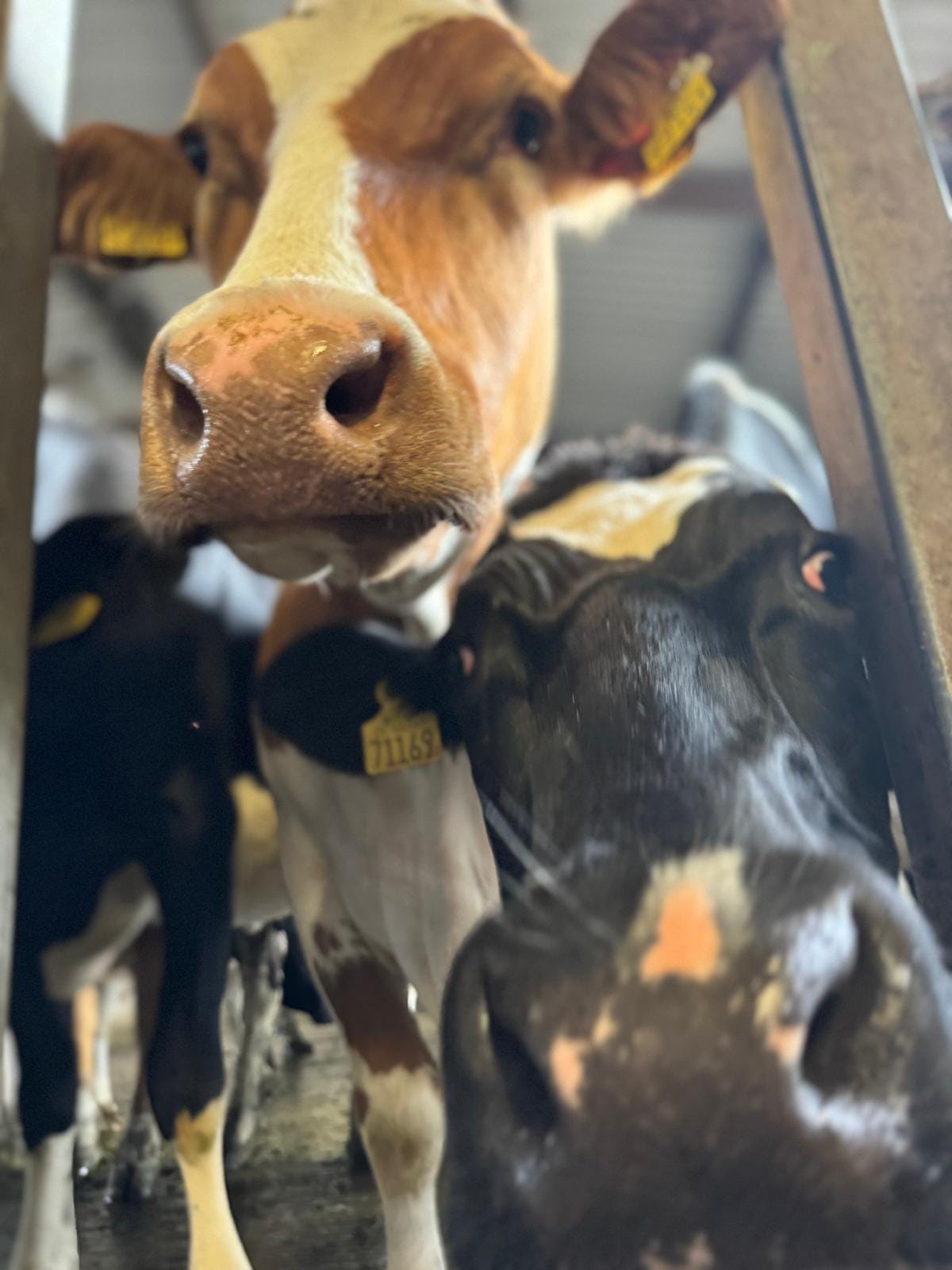
The first few weeks are exhausting. I become acutely aware of my lack of upper body strength. When I go for the cows I struggle to pull the wire handle enough to open the gaps. If it’s a particularly strained wire I’ll leave it and find a different gap because I know there’s no chance I’ll manage to close it even if I did get it open. Lifting 25kg bags of ration into the calves’ feeders takes the last of my strength in the morning. After a few weeks, these things get a little easier, although still there are some gaps I’ll never use. I get a few more rattles off the electric fence before I learn the tango of temporary fencing. I learn the symptoms of mastitis, I learn to administer an intramuscular injection, and I learn how to avoid getting covered in cowshit. The cows start to get used to me and my chipper ‘Good morning ladies’ when I greet them. They become docile in my company, and less skittish. I try to give them scratches every day, and one or two let me. I decide to name one; Sophie. She’s a gentle little cow. Enjoys scratches on her neck and forehead. She’s often at the back of the herd, where I am, so I talk to her almost daily. I give her little pats on the back as we make our way from the field to the parlour. I name another Pirate because she has what looks like a patch over one eye and is inclined to do as she pleases. Pirate doesn't like scratches.
Over a week or so Sophie gradually became weaker. I returned from a few days away and suddenly she seemed hardly able to walk. It’s the Saturday evening of the June bank holiday weekend, it’s hot. I’ve swapped shifts with the relief milker so I’m on duty all weekend. I’m the only person in the yard - everyone else gone at silage. I follow Sophie from the field to the parlour and hold my breath as she struggles to step from the path onto the concrete. I send a text to my dad, ‘349 very weak’. No reply. I send a video of her with the caption ‘She looks like she’s about to collapse’. I’m not exaggerating. The rest of the cows are waiting for me to let them into the parlour. I decide if I don’t hear from Dad I will put Sophie into the small paddock beside the parlour, where she won’t have to walk as far. First I will let the rest of the ladies in. I go and turn on the milking machine and let the first round of ladies into the parlour. I check my phone. Still no reply. ‘Ok,’ I think, ‘I’ll put her in the small paddock, she’ll be fine’. I go back out through the parlour to find Sophie lying on the concrete.
At first I don’t realise what’s happened. That she can’t get up. That she won’t get up again. That it’s a bank holiday weekend which means an expensive vet call-out fee. That the truck that removes deceased animals won’t be able to come until the following Wednesday. I try to get her to stand. She can’t, but she’s still fairly calm. The other cows are getting agitated around me. She’s not cast, even with my limited cow knowledge, I know that her lying down with her legs underneath is better than her being cast. I decide to leave her to try to get up herself. Maybe when one of the lads comes back to the yard they can help me to get her up. I have to get on with milking the others, we’re already late. I milk the first round before I go back to check on her. She has moved a couple of feet forwards but still can’t get up. She’s agitated now, and has started to bellow softly. The other cows nose at her as they pass by. The reality of the situation starts to dawn on me and my eyes fill with tears. I can’t do anything to help her. I try to soothe her and try to help her get up but nothing works. Something is very wrong. I bring a bucket of water to her, at least she won’t die of heat stroke. I go back into the parlour and continue to milk the others. Going through the motions of it half blinded by tears. I feel ridiculous. It’s just a cow. Dad finally replies. ‘Just leave her there she will get up herself eventually’. I don’t think so. I finish milking the rest and let them all back out. I wash down the yard as normal. I go back to Sophie. She has moved another few feet to the side, where she has thrown herself out. She’s on her side now, and clearly in a lot of pain. I inform dad, and he tells me to call the vet. I feel a rush of relief. The vet will know what to do. At this point I’ve lost all hope of her standing again.
The vet administers glucose via IV as well as very strong painkillers and a steroid. He tells me if she’s to stand then it will happen in 12-14 hours. He explains that she seems to have had some kind of wasting disease, causing the weakness. But her inability to stand appears to be acute. He suggests the most likely cause is that the bull jumped up on her in the yard and broke her back. He believes she’s paralysed in the back legs, he doubts she’ll stand again. I’m instructed to move her into the small paddock with the loading shovel, where the ground will be softer for her. She’s quietened down after being given the injections, the painkillers bringing her some relief. I enlist my brother and two other lads to help me to move her into the field. I desperately try to hide that I’ve been crying. Important not to betray any emotions in North Kerry, especially over an animal. We get her sitting upright again in the field, she seems more content. I bring her a bucket of ration and a bucket of water. She happily eats the ration. I pretend she will be fine in the morning, though I know she won’t.
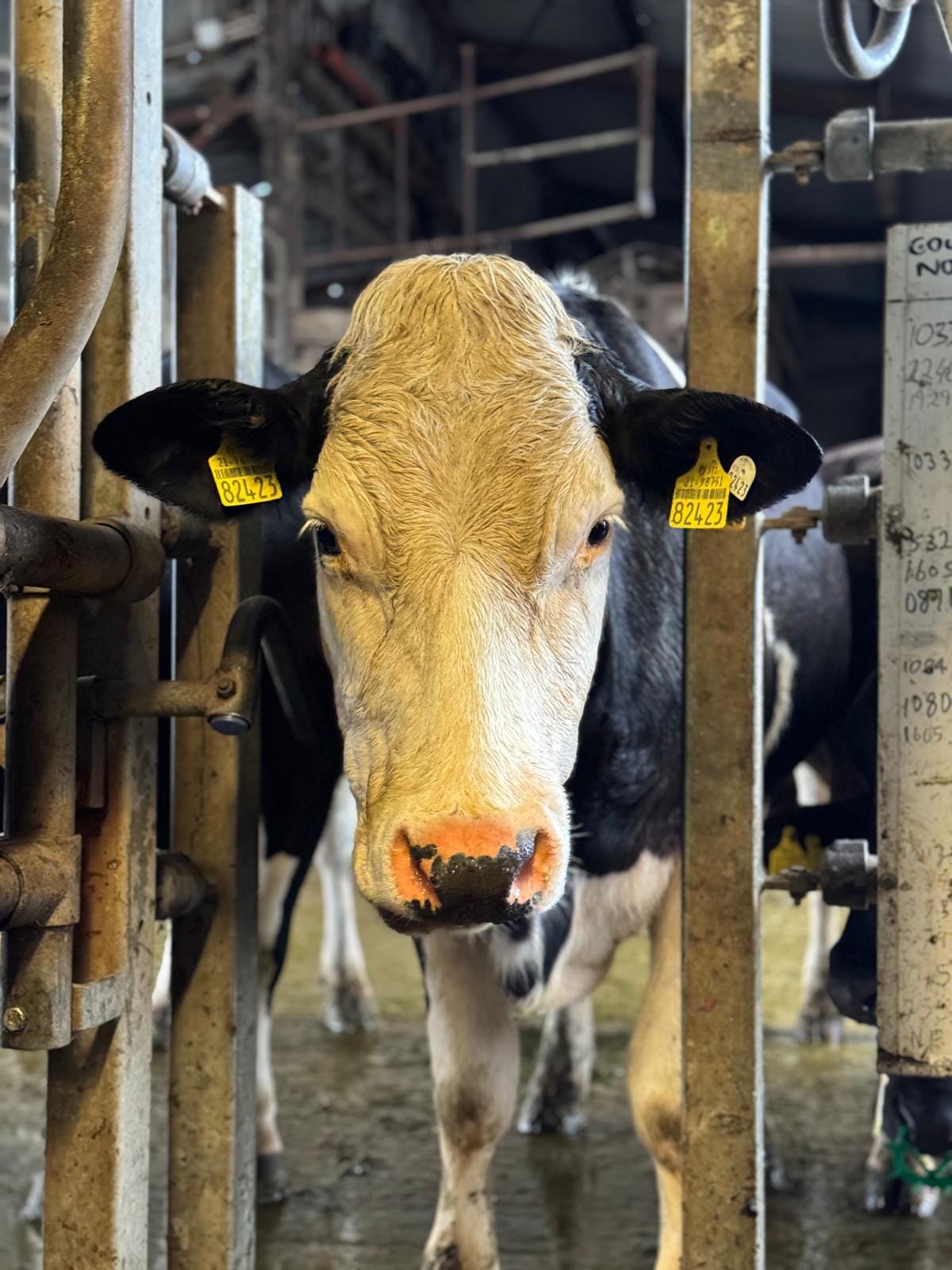
The vet returned the following morning to put her to sleep. I scratch her forehead as he administers the injection, she slips away peacefully. I get on with my other jobs and try not to think about it. She lies in the field beside the parlour for another three days before the truck arrives to take her away. I swallow the lump in my throat every time I pass by and look the other way. I swear I won’t name any of the others. Better not to get attached. The next few months pass quickly. I begin to really enjoy the morning milking. I notice the season changing each day as I go for the cows. The sky is blue and bright at 6:30 by the time the hawthorn and rose bushes have burst into flower. The air is heady with an almondy scent. Bees buzz about happily. I patiently await the arrival of elderflower and meadowsweet and then watch them decline in just a few short weeks. The blackcurrants arrive in a flurry and disappear as the first blackberries crop up. The slugs ravish the dahlias that I’ve spent months nursing as soon as I plant them out. The grass is growing quicker than the cows seem able to eat it. The calves get stronger and eventually are allowed out full-time. I no longer have to haul bags of ration to their feeder. Just as quickly as the summer began, it is over. Today marks the first of September. There’s a noticeable chill in the mornings and it’s almost 7 before the sun is casting it's first rays across the parlour. I’ve learned to spot symptoms of weakness and pain in cows and no longer hesitate in requesting the vet. I’ve learned that the ones that hang toward the back of the herd tend to be sick, so I observe these cows with extra diligence. There are two that let me give them scratches now. One of them is very hardy and strong. She hangs out in the middle of the herd - a safe bet. She sticks her head into the parlour every morning for scratches. I decided this week to name her Margot.
I hope you’ve enjoyed reading. If so then please subscribe and you’ll receive next week’s meandering directly to your inbox. :) x